
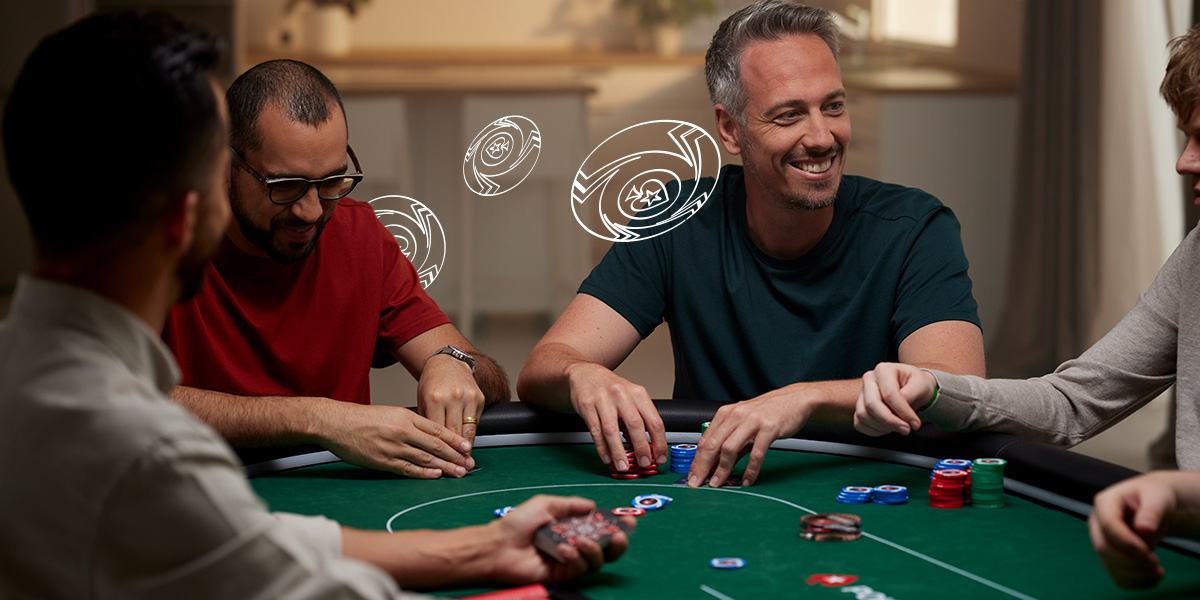

Online poker is a game of numbers, data HUDs, and rapid mathematical modeling. When you transition to the live felt, however, you enter a completely different competitive arena. While the mathematical foundations of the game remain identical, live poker introduces a profound human element that cannot be replicated behind a computer screen. In a brick-and-mortar casino card room, you are constantly exposed. Your physical posture, your verbal interactions, the speed with which you move your chips, and the hands you choose to show all contribute to a running narrative in the minds of your opponents.
This narrative is your table image. It is the specific psychological profile your opponents construct about your playing style. Masterful live players understand that their table image is not a static reputation to be protected, but a dynamic strategic weapon to be manipulated. By consciously shaping how the table perceives your play, you can bait opponents into calling your massive value bets or folding their strong hands to your bluffs, maximizing your hourly win rate.
The Pillars of Perception: What Shapes Your Image
Your table image begins forming the exact moment you sit down at the poker table. Opponents look for shortcuts to categorize your playing style, often relying on initial stereotypes before a single hand is even dealt.
Several key factors immediately establish your baseline persona:
-
Physical Attire and Demeanor: A player wearing a tailored suit or business casual attire projects a completely different persona than someone wearing a oversized hoodie, sunglasses, and industrial noise-canceling headphones. The former may be viewed as a recreational player winding down after work, while the latter is instantly flagged as a serious, analytical grinder.
-
Chip Management and Mechanics: The way you stack, count, and riffle your chips signals your comfort level on the live felt. Clean, symmetrical stacks of one hundred chips indicate a veteran presence. Fumbling with your chips or struggling to post a blind signals an amateur who may be easily intimidated.
-
Verbal Engagement and Social Tendencies: Quiet, hyper-focused players project an image of intense seriousness and mechanical play. Highly conversational players who laugh, share stories, and order drinks are often perceived as loose, emotional, and playing primarily for entertainment.
The Traditional Table Image Profiles
To manipulate your image effectively, you must understand the standard categories that players use to organize their mental notes. Most opponents will attempt to slot you into one of four traditional archetypes.
The first is the Tight-Passive player, often referred to as a rock or a nit. This individual plays an incredibly narrow range of starting hands and rarely raises, preferring to check and call. When a Tight-Passive player suddenly gets aggressive and bets big, the entire table knows to fold because their image screams absolute strength.
The second profile is the Loose-Passive player, commonly known as a calling station. These players love to see flops, playing far too many hands, but they lack the aggression to bet or raise. They chase draws inefficiently and call down bets with mediocre pairs.
The third profile is the Loose-Aggressive player. They play a wide variety of hands and use aggressive betting, raising, and three-betting to put maximum pressure on their opponents. They are highly unpredictable and difficult to play against, but their image means they rarely get credit for a monster hand.
The fourth and most dangerous profile is the Tight-Aggressive player. They are highly selective with their starting hands, but once they enter a pot, they play with immense power and assertion. This is the baseline strategy for most successful professionals, as it combines mathematical discipline with tactical pressure.
Executing the Art of the Image Flip
The true magic of table image mastery lies in the concept of the image flip. This occurs when you deliberately cultivate one specific reputation over several hours, only to completely reverse your strategy when the financial stakes are at their highest.
Consider a scenario where you sit down at a new table and decide to play an incredibly tight, disciplined game for the first two hours. You fold consistently, show down only premium pocket pairs, and avoid any complex bluffs. Your opponents will collectively tag you as a conservative player who only bets when they hold the absolute nuts.
Once this perception is cemented in their minds, your table image possesses massive leverage. You can now execute high-stakes bluffs with an incredibly high success rate. When you suddenly raise a coordinated board that connects heavily with a loose opponent’s range, they will look at your past two hours of inactivity, respect your tight image, and fold strong cards face-up because they believe it is mathematically impossible for you to be bluffing.
Conversely, if you spend the early portion of a session playing loose, playing speculative hands, and showing a couple of failed bluffs, the table will view you as a reckless maniac. When you eventually pick up pocket aces or a flopped full house, you can bet aggressively, knowing that your loose image will provoke frustrated opponents into calling you down with weak top-pairs or mediocre draws.
The Importance of the Showdown and Intentional Exposure
Every time a poker hand reaches a showdown, vital strategic information is exchanged. A masterful live player treats the act of showing their cards as a calculated marketing campaign.
If you execute a successful bluff and your opponent folds, you are under no legal obligation to show your cards. However, selectively showing a bluff can be a powerful tool to alter your table image. If the game has grown stagnant and opponents are folding too often to your bets, showing a total air bluff can instantly wake the table up. It shatters any perception that you are a boring, predictable player, creating an immediate psychological urge in your opponents to catch you red-handed in the next pot.
Alternatively, if you have been playing aggressively but want to quiet the table down, ensuring that you show down a sequence of highly legitimate, premium hands will restore an aura of invincibility to your bets. You must constantly audit what your opponents have seen you do, as their memory of your recent showdowns dictates how they will react to your future wagers.
Auditing Individual Opponent Awareness
A common mistake amateur players make when trying to manage their table image is assuming that every player at the felt is paying equal attention. Your table image only exists if an opponent has the cognitive capacity and focus to observe it.
When assessing how to deploy your image, you must categorize your opponents based on their level of awareness:
-
Level Zero Players: These are completely casual, recreational players who are entirely focused on their own two cards. They do not look at your betting sizing, they do not notice that you have folded twenty hands in a row, and they do not care about your attire. Against Level Zero players, attempting to use an image flip or a complex bluff is a massive waste of chips. You must simply play a straightforward, value-driven strategy.
-
Level One Players: These individuals are actively trying to figure out what you hold. They notice basic trends, such as whether you are playing tight or loose, and they remember the last big hand you showed down. This is the prime target demographic for table image manipulation. Their surface-level observations make them highly susceptible to being deceived by an image flip.
-
Level Two Players: These are highly advanced, thinking players who are actively analyzing what you think they have, and what image you are trying to project. Against Level Two opponents, the psychological game becomes multi-layered. You must recognize that they are trying to read your image manipulation, requiring you to balance your ranges with deep mathematical balance rather than simple psychological tricks.
Frequently Asked Questions
How long does it take to establish a reliable table image at a new live poker table?
A baseline table image begins to form within the first thirty to forty-five minutes of gameplay. During this window, players will observe how many pots you enter, how you handle your chips, and your overall social demeanor. However, a truly robust, deeply ingrained image that can be reliably exploited for massive bluffs usually requires two to three hours of consistent, stable behavior.
Can my physical ticks or tells completely override my intended table image?
Yes, high-level opponents will prioritize physical tells and behavioral changes over your general table image. If you have spent hours cultivating a loose, aggressive persona, but your hands visibly shake and your voice cracks when you suddenly place a massive river bet, an observant player will recognize the physical manifestation of genuine stress and correctly deduce that you have a monster hand, completely ignoring your manufactured wild image.
Is it possible to maintain a professional table image while being highly talkative and social?
Absolutely. Being social and conversational does not mean you are a poor player. In fact, many world-class live professionals utilize a gregarious, friendly image to mask their cutthroat mathematical strategy. By keeping the table laughing and comfortable, they encourage recreational players to play longer, stay relaxed, and make emotional decisions, while the professional continues to execute precise, calculated ranges behind the friendly smile.
What should I do if my table image is ruined by a series of unavoidable bad beats?
If you suffer a sequence of cooler hands where you are forced to get all your chips in with strong cards but lose to a luckier draw, your table image may accidentally shift toward looking unhinged or unlucky. In these moments, the best course of action is to reset your image by taking a short physical break away from the table. Walk away for ten fifteen minutes, clear your mind, and return with a calm, disciplined posture to signal to the table that you are entirely unfazed by the variance.
How does table image dynamics change when moving from a nine-handed table to a short-handed table?
As a poker table loses players and shifts to a short-handed format, such as five or six players, table image dynamics accelerate dramatically. In a nine-handed game, you can blend into the background by folding for an hour. In a short-handed game, the blinds hit you much faster, forcing everyone to play a wider, more aggressive range of cards. Your image will be scrutinized on almost every single orbit, making aggressive image manipulation and adaptation mandatory for survival.
Should I intentionally dress like a tourist or an amateur to deceive my opponents?
Dressing like a casual tourist, often referred to as costume play, is a legitimate and highly effective method to manipulate your initial table image. By wearing local sports merchandise, vacation attire, or acting slightly confused about casino chip colors, you can induce thinking opponents into treating you with condescension or overconfidence. This creates an immediate operational edge when you subsequently deploy advanced, professional-grade tactical lines that completely catch them off guard.